




You can close a newspaper.
You can ban a protest.
You can arrest a political activist.
You can disappear a student.
But there is perhaps no more profound form of political repression than making a teacher afraid of entering a classroom.
Because when fear enters the classroom, it does not remain with the professor.
It sits beside the students.
It enters the library.
It settles into the pages of textbooks.
It follows young people home.
And eventually, it becomes part of the intellectual DNA of an entire society.
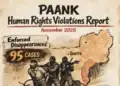
This is why the reported dismissal of 95 university teachers in Balochistan is not merely an administrative episode. According to recent reports, the provincial government says 100 government employees were dismissed over what it describes as involvement in an “anti-state narrative,” including 95 university teachers; officials also said two additional teachers face pending cases. (The Balochistan Post)
The government has described the action as a response to alleged anti-state activity and violations of official obligations. (Daily Ausaf)
But the fundamental questions begin precisely where the official explanation ends.
What did these professors actually do?
Were they convicted of a crime?
Were they given individual charges?
Were they given the right to defend themselves?
Were independent inquiries conducted?
Were they dismissed for professional misconduct—or for their political opinions?
And perhaps the most important question of all:
Can a state that claims to believe in education afford to punish teachers for thinking?
These questions deserve answers not only from the Balochistan government, but from every institution that claims to defend academic freedom, constitutional rights and the rule of law.
When Dissent Becomes a Crime
There is a dangerous transformation taking place when disagreement with the state is automatically translated into hostility toward the state.
A professor may criticise government policy.
A historian may challenge an official version of history.
A political scientist may question constitutional arrangements.
A sociologist may examine militarisation.
A student may ask why disappearances occur.
None of these acts, by themselves, should turn a university into a security file.
The distinction between criticism of a government and hostility toward a state is fundamental to any democratic society.
Governments are temporary.
States are institutions.
Constitutions are supposed to protect citizens precisely because governments can be wrong.
If every criticism of the government is interpreted as an attack on the state, then democratic accountability becomes impossible.
And if every political opinion expressed by a university teacher can become grounds for dismissal, the university ceases to be a university.
It becomes an extension of the security apparatus.
That is the danger.
A University Is Supposed to Be a Place Where Power Is Questioned
The purpose of higher education is not to produce obedient citizens.
Its purpose is to produce thinking citizens.
Universities exist because societies understand that knowledge cannot flourish under intellectual obedience.
A student must be allowed to ask:
Why?
A historian must be allowed to ask:
What happened?
A political scientist must be allowed to ask:
Who holds power, and under what law?
A professor must be allowed to ask:
Is the government right?
If the answer to these questions is predetermined by the state, there is no longer an academic environment.
There is only instruction.
And instruction without intellectual freedom is not education.
It is indoctrination.
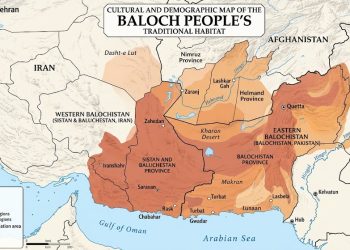
This is particularly serious in Balochistan, where political history itself remains deeply contested.
Questions concerning the province’s political status, natural resources, federalism, military operations, disappearances and national identity are not abstract academic subjects. They are questions that shape the lives of millions.
A university that cannot discuss them openly cannot prepare a generation to understand the society in which it lives.
The Teacher as a Political Threat
Why would a government fear a professor?
A professor does not command an army.
A lecturer does not control the treasury.
An academic does not possess the machinery of the state.
The weapon of a teacher is an argument.
The weapon of a researcher is evidence.
The weapon of a historian is memory.
The weapon of a student is a question.
And yet authoritarian systems have always understood something that democratic governments sometimes forget:
ideas can be more powerful than weapons.
A weapon can kill a person.
An idea can survive a generation.
That is why regimes that fear political thought often begin by controlling universities, censoring books, intimidating academics and criminalising dissent.
The objective is not merely to punish individuals.
It is to change what future generations believe they are permitted to think.
The Question of Due Process
There is another issue that cannot be buried beneath political rhetoric: due process.
If 95 university teachers have been dismissed, the public deserves to know the legal basis for each dismissal.
Collective accusations cannot replace individual evidence.
A teacher cannot be guilty simply because another person has been accused of something.
If the government believes that particular academics committed offences, then it should identify those offences and allow the accused to defend themselves before an impartial authority.
If criminal acts were committed, prosecute them.
If administrative misconduct occurred, follow the applicable disciplinary procedure.
If the issue is merely political expression, then the state enters much more dangerous constitutional territory.
The right to disagree is one of the foundations of political freedom.
The government cannot simultaneously demand loyalty from citizens and abolish their freedom to question the government.
That is not loyalty.
It is submission.
What Exactly Is an “Anti-State Narrative”?
The phrase itself demands examination.
What constitutes an “anti-state narrative”?
Is it a call for violence?
Is it support for an armed organisation?
Is it advocacy for political independence?
Is it criticism of the military?
Is it criticism of the government?
Is it reporting allegations of enforced disappearances?
Is it discussing Baloch nationalism?
Is it publishing an article?
Is it posting a political opinion online?
These are not interchangeable acts.
A functioning legal system must distinguish between them.
Otherwise, the term becomes so elastic that almost any inconvenient opinion can be placed inside it.
And once that happens, the law ceases to protect freedom and becomes an instrument for deciding which thoughts are permissible.
A state that cannot distinguish between an idea and an act will eventually criminalise thought itself.
The University Already Stands on Fragile Ground
The dismissal of teachers comes at a particularly troubling time for higher education in Balochistan.
The province already faces serious educational disadvantages. Earlier this year, reporting highlighted the limited access to higher education in Balochistan and concerns over the province’s public universities and degree programmes. (Dawn ePaper)
Public universities also face financial and administrative pressures.
In March, the provincial government released more than Rs857 million to public-sector universities for salaries and pensions, illustrating the financial pressures under which the institutions are operating. (Dawn)
In July, Balochistan’s Public Accounts Committee ordered a review of appointments and promotions at Sardar Bahadur Khan Women’s University after raising concerns about alleged irregularities. (Dawn)
These problems require institutional reform, better funding, stronger academic standards and transparent governance.
They do not require the politicisation of the classroom.
Indeed, the province can least afford to lose qualified academics at a moment when it desperately needs more teachers, researchers and intellectuals.
From the Classroom to the Prison Cell
There is a larger pattern that deserves attention.
In June, 32 teachers and education staff were suspended in Balochistan over alleged participation in a protest movement, according to Dawn, which reported that the action was taken under the Balochistan Employees Efficiency and Discipline Act, 2011. (Dawn)
In the same month, 34 college teachers were reportedly compulsorily retired over alleged participation in a strike. (Daily Qudrat English)
Now come reports of 95 university teachers dismissed in connection with an alleged “anti-state narrative.”
Taken individually, each case may have its own facts and legal circumstances.
Taken together, however, they raise a larger question:
Is education gradually being transformed from a public institution into a zone of political control?
That question cannot be dismissed as propaganda.
It requires investigation.
What Happens to the Student?
The forgotten victim of political repression in universities is often the student.
Imagine entering a classroom knowing that the professor standing before you may lose his or her livelihood for expressing an unpopular opinion.
What question will you ask?
Imagine writing an essay about Balochistan’s political history while wondering whether your interpretation might be reported to authorities.
Will you write honestly?
Imagine studying political science while believing that certain political questions cannot safely be discussed.
Will you become a political scientist—or simply a memoriser of approved answers?
This is how intellectual repression works.
It does not need to arrest every student.
It only needs to make students afraid of becoming visible.
Fear does the rest.
A State Confident in Its Legitimacy Does Not Fear Professors
There is a profound political principle here.
A legitimate state does not need intellectual conformity.
It can withstand criticism.
It can answer questions.
It can publish evidence.
It can defend its constitutional position.
It can allow historians to disagree.
It can permit professors to challenge policy.
Indeed, a confident state should welcome criticism because criticism exposes weaknesses before those weaknesses become crises.
The insecurity begins when the state starts treating questions as threats.
Then the professor becomes suspicious.
The journalist becomes suspicious.
The student becomes suspicious.
The researcher becomes suspicious.
Eventually, citizenship itself becomes conditional upon ideological obedience.
That is not the strength of the state.
It is the fragility of the state.
Balochistan Does Not Need Fewer Thinkers
Balochistan needs more universities, not fewer voices.
It needs more professors.
More laboratories.
More historians.
More political scientists.
More journalists.
More researchers.
More students who can argue with their teachers.
More teachers who can challenge governments.
More scholars who can examine the province’s history without fear.
If the state genuinely believes that its constitutional and political position is just, it should welcome scholars who challenge it.
The strongest argument is not the one protected by punishment.
It is the one that survives scrutiny.
If an idea is wrong, defeat it with evidence.
If an argument is false, defeat it with facts.
If a political claim is unjust, defeat it through democratic persuasion.
Do not defeat ideas by firing their authors.
The Fundamental Question
The most disturbing question surrounding the dismissal of the 95 teachers is therefore not simply whether the dismissals were lawful.
It is whether the state understands what a university is.
Is a university a department of the government?
Or is it a space where society can think independently about the government?
Is a professor a civil servant whose intellectual conscience belongs to the state?
Or is a professor a citizen whose professional duty includes the pursuit of truth?
Can an academic lose employment because the state dislikes the political implications of his research?
Can an entire generation of students be taught that political disagreement is professionally dangerous?
And if the answer to these questions is yes, then what remains of academic freedom?
The Classroom Must Not Become a Crime Scene
There is an image that should haunt every society confronted with this question:
A classroom.
Empty.
The professor’s chair is vacant.
The blackboard remains covered with yesterday’s notes.
Books are still on the desk.
Students are waiting.
But the teacher is gone—not because the university has no need for him, but because his ideas have become politically inconvenient.
That is when a classroom becomes a crime scene.
Not because blood has been spilled across its floor.
But because the freedom to think has been violated inside it.
The dismissal of 95 university teachers must therefore be examined with the seriousness normally reserved for matters of national consequence.
The government owes the public names, charges, evidence, legal grounds and due process.
The universities owe their students a defence of academic freedom.
The courts owe the accused impartial scrutiny.
And civil society owes the teachers something equally important:
the refusal to allow intellectual freedom to disappear quietly.
Because today it may be a professor.
Tomorrow it may be a student.
The day after tomorrow, it may be anyone who asks a question the powerful would rather not hear.
And when a society reaches the point where asking questions becomes dangerous, the real crisis is no longer inside the university.
It is inside the state itself.