
There is a grief in Balochistan that does not begin with death. It begins with disappearance.
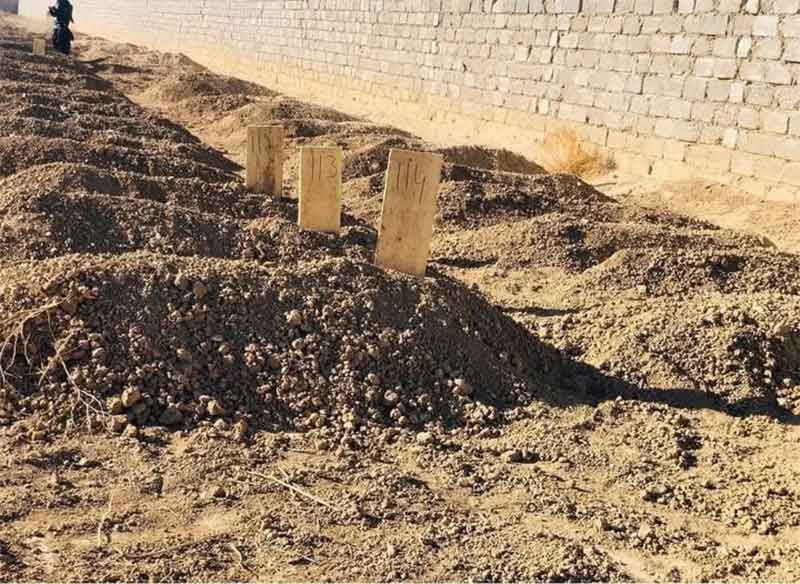
And then, in a cruelty almost unimaginable, it ends with another disappearance — the disappearance of the dead themselves.
Across Balochistan, families have spent years searching for sons taken in the night, brothers dragged from their homes, students seized on their way to class. They live in a suspended state between hope and mourning, between the possibility of life and the fear of death. But an even darker reality has emerged: when a missing person is believed to have died in custody, families are told that the body has already been buried — without being told where, when, how, or under whose authority.
This is not only a violation of human rights. It is a violation of humanity itself.
It is the erasure of a person twice — first as a living being, then as a dead one.
A Crisis That Cannot Be Buried
On September 6, 2026, UN experts expressed alarm over the alleged enforced disappearance, torture and death in custody of Baloch student Imran Ali. They demanded an independent investigation, forensic examination, proper identification of the body, and its dignified return to his family.
Days later, on September 19, eight bullet-riddled bodies were recovered in Gwadar and Panjgur. One of them, Ahsan, had reportedly been taken from his home months earlier. His family had searched for him in police stations, hospitals, and courts — only to receive a corpse without answers.
These cases do not prove responsibility for every death. But they raise a question that no state should be allowed to bury:
What happens to people after they disappear into the custody or reach of the state?
Human Rights Watch has long warned that enforced disappearance exposes detainees to torture, ill-treatment and extrajudicial execution. The UN Working Group on Enforced Disappearances has received allegations of inadequately investigated graves in Balochistan.
The horror is not only in the killing. It is in the uncertainty surrounding the dead.
The Dead Without Names
A family may spend months or years searching for a missing relative. Then, instead of receiving a body with a medical report, an autopsy, a death certificate and an explanation, they may hear that an unidentified body has already been buried.
Buried where? Buried when? Buried by whom? Buried under what law?
These are not political questions. They are the minimum questions of a civilised legal order.
In 2025, twenty unidentified bodies held at Quetta Civil Hospital were buried as “unclaimed.” Rights advocates warned that unidentified bodies in Balochistan were becoming part of a wider crisis of accountability — a conveyor belt of death without identity, without investigation, without truth.
Amnesty International reported that Pakistan’s official Commission of Inquiry recorded 125 new enforced-disappearance cases in the first half of 2025 alone. Civil-society groups documented even more — cases never registered, never acknowledged, never investigated.
But statistics cannot capture the human tragedy.
A mother does not need a statistic. She needs to know where her son is buried.
A child does not need a government statement. She needs to know where her father lies.
A brother does not need another promise of an inquiry. He needs the truth.
The Dignity of the Dead: A Universal Principle
Islam places profound importance on the dignity of the human body and the proper burial of the dead. International law does the same. Human conscience does the same.
No state — whatever its security argument — should be permitted to turn the identity and burial place of a human being into a secret.
Pakistan’s security institutions justify their operations in Balochistan as measures against militancy. But security arguments cannot erase the state’s obligation to distinguish between combatants and civilians, nor can they suspend due process, humane treatment in detention, identification of the dead, or the family’s right to information.
The answer to violence cannot be another form of lawlessness.
If a person has committed a crime, he must be charged, tried and sentenced through a transparent judicial process. If he dies in custody, the circumstances of his death must be independently investigated. If an unidentified body is recovered, it must be scientifically identified before burial. If a family claims the body belongs to a disappeared relative, the state must provide evidence — not silence. Balochistan does not need more secret graves. It needs truth.
What the International Community Must Demand
The world cannot remain indifferent to a region where people disappear alive and disappear again after death.
The international community — especially Europe and the Gulf, where human dignity and rule of law are foundational principles — should demand:
- Transparent investigations into cases where disappeared persons are later found dead
- Independent forensic examinations
- Proper records of detention
- Access for lawyers and families
- Accountability for torture, unlawful killing, and concealment of a victim’s fate
These are not political demands. They are human demands.
The Dead Cannot Speak — So the Living Must Refuse Silence
The dead cannot testify. They cannot describe what happened in the last hours of their lives. They cannot tell us who held them, who questioned them, who harmed them, who buried them.
That is precisely why the living must refuse to let them disappear a second time.
Balochistan’s missing and unidentified dead are not numbers. They are not “unclaimed bodies.” They are not “security cases.”
They are human beings whose lives mattered, whose deaths matter, and whose families deserve the truth.
The silence that follows their disappearance is not the silence of peace. It is the silence of fear.
And fear must never be allowed to bury the truth.
Baloch Siddik Azad is a Baloch writer, political commentator and human-rights advocate based in Sweden. His work focuses on enforced disappearances, custodial deaths and the crisis of unclaimed bodies in Balochistan, documenting how state violence reshapes the lives of families and communities. Known for his literary-political style, he writes at the intersection of memory, justice and resistance, giving voice to those silenced by conflict and impunity. His essays have been read across the Baloch diaspora and international human-rights circles, where he continues to highlight the urgent need for transparency, accountability and dignity for the missing and the dead.