


Based on the article provided, here is the clean, ad-free text version of the news report:
BLA Strikes Again: Pakistan Suspends Jaffar Express Amid Escalating Attacks in Balochistan
The Balochistan Liberation Army (BLA) has been carrying out relentless attacks against Pakistan military personnel and security agencies, leading to the suspension of the Jaffar Express services. Authorities decided the risk was too high to operate regular train services from the Quetta railway station, which has come under repeated attacks.
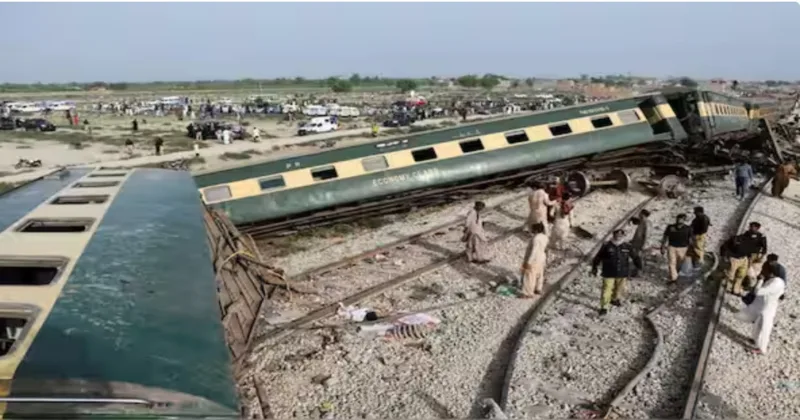
Pakistan Railways has officially cancelled the Jaffar Express service from Quetta to Peshawar. Train operations from Balochistan’s capital remain disrupted following last week’s attack on a military shuttle train. The BLA, a group of armed Baloch rebels fighting the Pakistani state for an independent Balochistan, claimed responsibility for the attack.
The Jaffar Express is a critical train line that primarily caters to Pakistani Army personnel, police, and other security forces. Because of this, it remains a high-priority target for the BLA, which has attacked it at least twice using suicide bombers. On May 24, a shuttle train carrying military personnel from Quetta Cantt to the main Quetta railway station was blown up by a suicide bomber named Bilal Shahwani, according to reports from The Balochistan Post.
For most observers, the increasing frequency and scale of attacks indicate that the BLA and other armed organizations now possess the ability to strike not just remote regions, but also major urban centers and critical infrastructure. Repeated attacks on the railway network have raised serious concerns regarding security and intensified questions surrounding Pakistan’s control and authority in the region.
BLA Targeted Pakistan Military Personnel
Most passengers on the Jaffar Express on the day of the attack were either military personnel or their family members, scheduled to travel to their hometowns in Punjab or Khyber-Pakhtunkhwa (KP) provinces for Eid celebrations. On normal days, this train completes its 1,650 km journey from Peshawar to Quetta in a little over 34 hours.
Railway officials stated that the Quetta to Peshawar service has been suspended and will not operate, citing “unavoidable circumstances.” Officials did not state when or if the train service will be restored.
Additionally, the Jaffar Express traveling from Peshawar to Quetta will be turned back from Jacobabad, while the Bolan Mail service to Karachi and the Chaman Passenger train have also been suspended. This highlights how the BLA has succeeded in creating fear among security forces; if a train service catering mainly to military personnel cannot safely operate, it demonstrates how unsafe train journeys have become for common people.
“The operation was designed with such meticulous precision in terms of military science and timing that if there had been a variance of even five minutes earlier or later in its planning and execution, targeting the enemy forces would have been impossible,” a BLA statement said.
The suspension follows the May 24 attack near Chaman Phatak in Quetta, where a shuttle train carrying Pakistani military personnel from Quetta Cantonment to Quetta Railway Station was targeted. The bogies in the shuttle train were intended to be attached to the Jaffar Express for the onward journey.
Presenting Military Deaths as Civilian Casualties
The BLA claimed responsibility for the attack, stating the operation was carried out jointly by its Majeed Brigade and its intelligence wing, ZIRAB. Their explicit target was the military shuttle operating between the cantonment and the railway station.
The BLA rejected official accounts describing the casualties as civilians, accusing Pakistani state media and officials of trying to present military casualties as civilian deaths to conceal a “humiliating intelligence failure” and a breach of the fortified cantonment security perimeter.
The BLA statement asserted that attacks on civilians and non-combatants are against its policy, and that its targets are strictly limited to the military, its subsidiary institutions, the administration, state-backed armed groups, and projects it accuses of exploiting Baloch resources.
Way Beyond Traditional Guerrilla Tactics
The group framed the attacker Shahwani’s role as evidence of the BLA’s “institutional evolution and ideological superiority,” arguing that the decision of an experienced field commander to volunteer for a fidayee (suicide) mission shows the organization has moved past traditional guerrilla methods into a modern, formal military structure.
The BLA identified the attacker as Bilal Shahwani (also known as Saahin) and claimed that 82 Pakistani military personnel were killed and more than 121 injured in the blast.
Lately, Pakistan has begun referring to the BLA as ‘Fitna al-Hindustan’ in an attempt to blame India for the attacks. Observers view this as an effort to divert attention away from the Baloch people’s local struggle against the Pakistani state.
The May 24 blast marks the third major deadly attack claimed by the BLA against trains or railway facilities used by the Pakistani military, following a major attack at the Quetta Railway Station in November 2024 and the hijacking of the Jaffar Express in Bolan in March 2025.