
From the Retaliatory Execution of Omar Dorostaran to the Hasty, Mass, and Retaliatory Executions of At Least 31 Baluch Political Prisoners
According to Haal Vash telgram’s, the execution of Omar Dorostaran—a Baluch political prisoner and seminary student—at Zahedan Central Prison today, Monday, October 12, 2026 (Mehr 20, 1405), has once again brought the history of executing Baluch political prisoners in the wake of armed clashes and incidents into the spotlight.
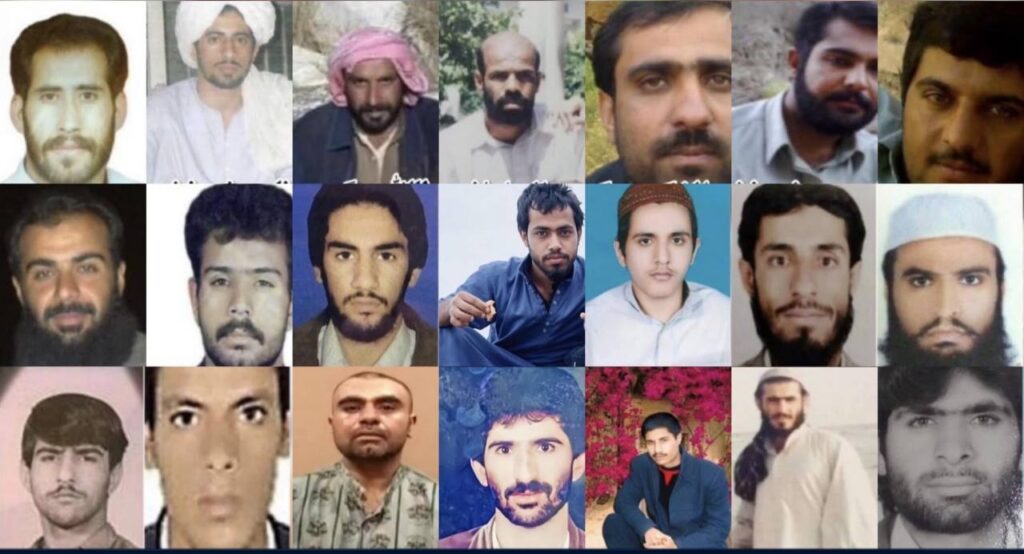
A review of four documented cases from previous years reveals that at least 31 Baluch prisoners were executed across four separate incidents: 16 prisoners in November 2013 (Aban 1392), 11 in December 2010 (Azar 1389), three in November 2006 (Aban 1385), and—in a solitary case—Nasrollah Shanbezehi in February 2007 (Bahman 1385). Regarding the execution of the 16 prisoners following the Saravan attack, judicial officials at the time explicitly described the action as an act of “reprisal”; reports concerning prior arrests, forced confessions, torture, and violations of fair trial principles have also emerged regarding the other cases.
While these cases differ in terms of timing, charges, and judicial procedural details, examining them collectively highlights the history of executions carried out against the backdrop of security developments in Sistan and Baluchestan, as well as concerns regarding the use of the death penalty as a form of retaliation. On October 26, 2013—one day after an attack by Jaish al-Adl on the Saravan border outpost that resulted in the deaths of 14 border guards—16 Baluch prisoners were executed in Zahedan Central Prison. These individuals were Mehrollah Rigi Mahernia, Abdolvahab Rigi, Habibollah Riginejad Shourki, Nazer Mollazehi, Hamed Vekalat, Salman Miaei, Ayoub Bahramzehi, Saeed Narouei, Azam Gorgij, Davoud Mirbalouchzehi, Hassan Rezaei, Habib Totazehi, Naser Shahbakhsh, Ahmad Dahmardeh, Hassan Barahouei, and Najibollah Bahadori. Mohammad Marzieh, the then-Prosecutor of Zahedan, described the move as an act of “retaliation,” even though reports indicated that the prisoners had been detained prior to the attack. Ahmed Shaheed, the then-UN Special Rapporteur, characterized these executions as retaliatory measures within a conflict and a violation of international human rights obligations.
On December 20, 2010, 11 Baluch political and prisoners of conscience—Naser Shahbakhsh, Lal-Mohammad Shahbakhsh, Abdolrahman Narouei, Ahmad Narouei, Balanch Narouei, Ataollah Rigi, Mohammad-Saleh Eslamzehi, Abdolraouf Shahbakhsh, Abdolbaset Shahbakhsh, Abdolnaser Shahbakhsh, and Abdolshakoor Rigi (known as Zangizehi)—were executed in Zahedan Central Prison. These executions took place following an operation by Jundallah in Chabahar. However, according to Shir-Ahmad Shirani and Mohammad-Saber Malek-Raeisi—two former political prisoners who were their cellmates—these individuals had been arrested approximately two years prior to the attack and were subjected to torture during their detention. They also reported that the trials took place without legal counsel and that the families were not informed of the impending executions—issues that raise serious questions regarding the basis of the charges and adherence to fair trial standards.
On October 30, 2006 (Aban 8, 1385), three Baluch political-prisoners of conscience—Ahmad Dahmardeh, Behzad Narouei, and Mohammad-Amin Hormozi—were executed in public on Bozorgmehr Street in Zahedan. They had been arrested in late 2004 (late 1382) and, according to published reports, were subjected to torture and coercion to extract confessions while held in security detention centers. The Abdorrahman Boroumand Center and human rights activist Keyvan Rafiee—who was a cellmate to some of them—have described the trial process as lacking the minimum standards of a fair trial, noting that there is limited independent, public information regarding the specific charges and the grounds for the death sentences.
On February 19, 2007 (Bahman 30, 1385), Nasrallah Shanbeh-Zehi, a Baluch political-prisoner of conscience, was executed in public at the very site of the incident—the Sarallah Boulevard bombing in Zahedan—just five days after his arrest. The Islamic Republic’s state broadcaster had previously aired his televised confessions; the footage showed visible signs of injury and physical abuse on his face and body. This sentence was carried out in a hasty process; notably, while the Jundallah group had claimed responsibility for the bombing, it had denied that its operatives had been arrested.
Omar Dorostaran—a 25-year-old, unmarried seminary student from the village of Charaghan in Rask County—was the son of Abdolqader. On Monday, October 12, 2015, state media announced his execution at Zahedan Central Prison. The Judiciary had accused him of supporting the Jaish al-Adl group and facilitating armed attacks, claiming the execution was carried out following confirmation by the Supreme Court.
These four cases comprise three mass executions involving a total of 30 prisoners and one individual execution; in total, 31 Baluch prisoners were executed across these four incidents. Regarding the case from November 2013, judicial officials at the time explicitly spoke of “retaliation.” Reports concerning prior arrests, forced confessions, torture, denial of legal counsel, and hasty trials have also emerged regarding the other cases.
Collectively, these cases demonstrate that the execution of Baluch prisoners following armed incidents and clashes—particularly in instances where government officials themselves have spoken of “retaliation”—is a practice with established precedent. Mass and retaliatory executions—particularly when prisoners were already in custody and their direct involvement in the cited incidents had not been independently proven—constitute an abhorrent act that violates fundamental principles of human rights and fair trial. The death penalty must not be transformed into a tool for vengeance in response to armed conflicts, and no security-related development can justify torture, the denial of the right to a defense, or the arbitrary deprivation of the right to life. Past instances—such as the executions of 16 Baluch prisoners in 2013 and 11 prisoners in 2010, along with other cited cases—further underscore the necessity for an independent review of the execution of Omar Dorastaran and for accountability regarding the judicial proceedings and allegations of rights violations in his case.
Under these circumstances, Taran’s case has heightened concerns regarding the onset of a new wave of retaliatory measures by the Islamic Republic against the Baluch people—particularly political prisoners and prisoners of conscience held in Sistan and Baluchestan’s prisons. While his execution alone is insufficient to confirm the start of a new cycle of retaliatory executions, the existing track record underscores the need for serious concern regarding the fate of other Baluch prisoners and highlights the necessity of demanding transparency concerning the judicial grounds for this verdict.