
Iran’s Islamic Revolution Guards Corps said on October 1 that it had dismantled an armed cell in Zahedan, the capital of the southeastern province of Sistan and Baluchestan, killing six members and preventing what it described as a planned attack.
According to the IRGC Ground Force’s Quds Base, the group was identified after intelligence work and information supplied by local residents.
Iranian authorities said several explosive devices were recovered from a hideout in the Manzel-Ab area and that operations were continuing to search for any remaining militants. The IRGC described the cell as a “Takfiri terrorist” group, but publicly available reporting did not initially identify the organization by name.
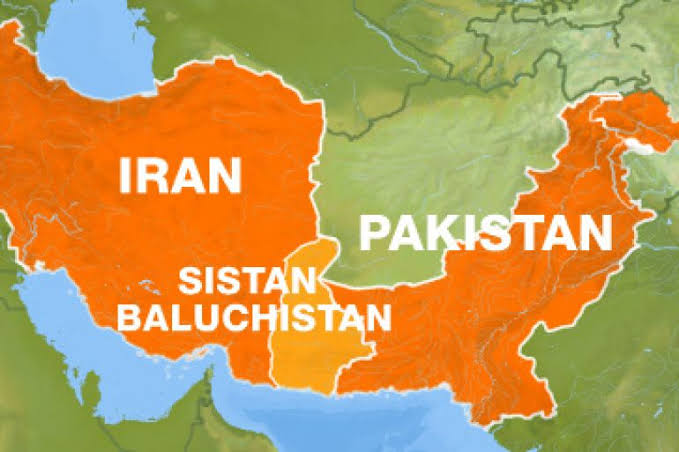
The incident is part of a broader pattern of intensified security operations in Sistan and Baluchestan, a strategically sensitive province bordering Pakistan and Afghanistan. The region has experienced repeated attacks on Iranian security forces, police, government facilities and civilians, while armed Baluch and Sunni Islamist groups have operated there for years.
One of the best-known groups is Jaish al-Adl, which has claimed responsibility for numerous attacks inside Iran. Less than two weeks before the October 1 operation, Iranian authorities said two alleged members of Jaish al-Adl were killed and another wounded and detained during a clash in Zahedan.
The latest operation therefore raises broader questions about why Sistan and Baluchestan remains one of Iran’s most persistent internal security challenges, which armed groups operate there and why instability along Iran’s southeastern frontier has proved so difficult to contain.
What happened in the latest IRGC operation in Zahedan
The IRGC said its forces identified an armed cell in Zahedan during the early hours of October 1 following intelligence operations and reports from residents.
The operation took place in the Manzel-Ab area of the city.
According to the IRGC Ground Force’s Quds Base, six members of the group were killed during the raid and several explosive devices were seized.
Iranian authorities said the cell had been preparing to carry out an attack in the area, although no further details were initially released about the intended target, timing or operational plan.
The IRGC said security personnel continued searching the hideout and surrounding area after the initial confrontation.
The official account described those killed as members of a “Takfiri terrorist” group, a term frequently used by Iranian authorities to describe extremist Sunni organizations.
However, authorities did not initially publicly identify the organization responsible for the alleged plot.
That distinction is important because several armed groups and networks have operated in Sistan and Baluchestan over the years.
The October 1 claims came from Iranian security institutions and had not initially been independently verified.
As with many counter-terrorism operations in areas with restricted access, detailed information about the identities of those killed and the circumstances of the confrontation may emerge only gradually.
Why is Sistan and Baluchestan a security hotspot
Sistan and Baluchestan occupies a particularly sensitive geographical position.
The province lies in southeastern Iran and shares long borders with Pakistan and Afghanistan.
Its location makes it an important corridor connecting Iran with South Asia, but it also creates significant security challenges.
Mountainous terrain, desert areas and long stretches of relatively remote borderland can make surveillance and border control difficult.
Armed groups operating in the region have sometimes used cross-border movement to evade Iranian security forces.
Iran has repeatedly called on Pakistan to strengthen security cooperation and prevent militants from operating near or across the shared frontier. Reporting on previous clashes has noted Iranian concerns that attackers can retreat toward Pakistan after conducting operations inside Iran.
The province also has a distinctive demographic profile.
Many residents are ethnic Baluch and Sunni Muslims, in contrast with Iran’s predominantly Persian and Shia population.
Political, economic and security grievances have contributed to long-running tensions in the region.
Iranian authorities generally describe the violence primarily as terrorism and separatism.
Baluch activists and outside analysts, however, have also pointed to economic marginalization, discrimination and political grievances as factors contributing to instability.
These explanations are not mutually exclusive.
Militant organizations can exploit genuine local grievances while simultaneously pursuing ideological or separatist objectives through violence.
Who is Jaish al-Adl
Jaish al-Adl is one of the most prominent armed groups operating in Iran’s southeast.
The organization emerged in the early 2010s and is generally described as a Sunni Islamist and Baluch militant group.
It has claimed responsibility for attacks against Iranian security forces, police installations and other government targets.
The group has operated primarily in Sistan and Baluchestan and in areas near Iran’s border with Pakistan.
Iranian authorities classify Jaish al-Adl as a terrorist organization and frequently refer to it by the alternative name Jaish al-Zolm, meaning “Army of Injustice.”
The group has been involved in shootings, bombings, kidnappings and other armed operations over the years.
Its activities have periodically increased tensions between Tehran and Islamabad because Iran has accused militants of exploiting territory on the Pakistani side of the border.
On September 17, Iranian security forces said they encountered armed Jaish al-Adl members in Zahedan during a patrol.
According to Iranian accounts, two alleged militants were killed in the ensuing firefight and a third was wounded and arrested.
The October 1 operation has not, based on the initial IRGC statement, been publicly attributed to Jaish al-Adl.
Nevertheless, the recent confrontation illustrates the continuing presence of armed networks in and around Zahedan.
Are new Baluch militant alliances emerging
Recent developments indicate that the militant landscape in southeastern Iran may be becoming more complex.
Reporting in September pointed to the emergence of a broader Baluch militant coalition involving several armed factions.
One such coalition has been referred to as the Popular Fighters Front, which reportedly incorporates or coordinates with organizations including Jaish al-Adl.
The coalition adds another layer to the security environment because it could allow previously separate groups to share personnel, weapons, intelligence or logistical networks.
Iranian security forces have responded with increasingly large operations.
In late August, authorities said they dismantled a cell linked to Jaish al-Adl in Sistan and Baluchestan, killing one person and arresting six others.
Security forces reported recovering assault rifles, grenades, an RPG launcher, C4 explosives, ammunition and satellite communications equipment.
Those seizures, if accurately reported, suggest that some militant cells possess more than small arms.
At the same time, the actual size, coordination and military capacity of the different organizations remains difficult to assess independently.
Iranian security agencies have a strong incentive to emphasize their operational successes, while militant groups have their own reasons to exaggerate their capabilities.
The emergence of broader alliances would nevertheless complicate Tehran’s counter-terrorism strategy because authorities would have to confront networks that may be increasingly interconnected rather than isolated cells.
Why is Zahedan particularly important
Zahedan is the capital of Sistan and Baluchestan and the province’s main political, administrative and economic center.
Its importance makes security incidents there especially significant.
Attacks in remote border districts can sometimes remain geographically contained.
Violence in Zahedan, by contrast, directly affects the provincial capital and can carry greater political and symbolic weight.
The city also sits close to important transport routes linking Iran with Pakistan and Afghanistan.
As a result, maintaining security in Zahedan is essential not only for local governance but also for trade and regional connectivity.
The city has repeatedly witnessed clashes, attacks and major security operations.
The September confrontation involving alleged Jaish al-Adl members also took place in Zahedan, on University Street, according to Iranian reports.
The recurrence of incidents inside the provincial capital suggests that armed networks are capable of operating not only in isolated border areas but also within or near significant urban centers.
That presents a different security challenge.
Urban militant cells can potentially exploit civilian infrastructure, communications networks and densely populated neighborhoods, making intelligence gathering and raids more complicated.
For Iranian authorities, preventing such groups from establishing permanent operational bases inside Zahedan is therefore a major priority.
Why do Iranian authorities frequently mention foreign involvement
Iranian officials have repeatedly accused foreign intelligence services and hostile governments of supporting armed groups operating inside the country.
The October 1 reporting again included claims that organizations attacking Iranian interests are believed by Tehran to have links with foreign intelligence agencies.
Such allegations should be treated as claims unless supported by independently verifiable evidence.
Iran has historically argued that some militant organizations are used by external actors to pressure or destabilize the Islamic Republic.
These accusations fit into Tehran’s broader security doctrine, which often interprets domestic armed opposition within the context of regional rivalry and external interference.
Foreign governments accused by Iran have frequently denied such claims.
In Sistan and Baluchestan, the cross-border nature of militant activity adds further complexity.
Groups may use territory outside Iran for refuge, logistics or movement without necessarily receiving direct sponsorship from the government of that neighboring country.
This distinction matters.
The existence of militants operating near an international border does not by itself prove state sponsorship.
Iran’s recurring accusations therefore form an important part of the political context, but individual claims require independent evidence before they can be treated as established fact.
How does the Pakistan border shape the conflict
The Iran-Pakistan border is central to understanding security dynamics in Sistan and Baluchestan.
Baluch communities live on both sides of the frontier.
This means ethnic, tribal and family networks often cross the international boundary.
For governments, however, this creates significant security challenges.
Militant organizations can potentially move personnel, weapons and supplies across remote border areas.
Iran has on several occasions accused armed groups of using Pakistani territory to organize or shelter after attacks.
Pakistan itself faces a separate Baluch insurgency and has carried out extensive security operations against militant organizations on its side of the border.
This creates both common interests and tensions between Tehran and Islamabad.
Both governments want to prevent armed groups from destabilizing their territories.
But disagreements frequently arise over who is responsible for preventing cross-border attacks and whether enough is being done to dismantle militant networks.
The border has occasionally become a direct source of bilateral tension when either country has conducted or threatened operations against militants believed to be operating on the other side.
Cooperation between Iran and Pakistan is therefore critical to reducing militant mobility.
Without effective intelligence sharing and border coordination, armed groups can exploit jurisdictional gaps between the two states.
What is Iran’s strategy against armed groups in the southeast
Iran’s approach combines intelligence operations, military action, policing and border security.
The IRGC Ground Force plays a major role in the province, particularly through its Quds Base.
Security services conduct surveillance, raids and targeted operations against suspected militant cells.
Recent cases demonstrate an emphasis on intelligence-led action.
The IRGC said the October 1 Zahedan operation followed both intelligence gathering and information from residents.
Iranian authorities have also carried out broader operations involving several security agencies.
In August, police, the IRGC and the Ministry of Intelligence reportedly cooperated in operations against a Jaish al-Adl-linked cell in Saravan.
Tehran also relies heavily on controlling roads and border areas and monitoring suspicious vehicles and communications.
However, security operations alone may not eliminate the underlying drivers of instability.
Sistan and Baluchestan has long faced development challenges, unemployment and complaints of political and economic marginalization.
Iranian officials have periodically announced infrastructure and development programs for the province, but security concerns remain persistent.
This creates a long-term challenge: authorities must suppress armed violence while also addressing conditions that militant groups may exploit for recruitment or local support.
Could violence in Sistan and Baluchestan escalate further
Further clashes remain possible because the factors driving instability have not disappeared.
Armed groups retain a presence in the broader border region, while Iranian security forces are conducting increasingly frequent operations against suspected cells.
Recent incidents in August, September and early October show a sustained pattern rather than a single isolated confrontation.
Escalation could take several forms.
Militant groups could attempt retaliatory attacks against security installations or government personnel.
Iranian authorities could respond with larger military and intelligence operations.
Cross-border incidents could also increase tensions with Pakistan if Tehran believes militants are receiving sanctuary beyond Iranian territory.
Another important factor is the degree to which separate militant organizations coordinate.
If broader alliances become more effective, they may be able to conduct more sophisticated or simultaneous attacks.
Conversely, sustained intelligence pressure and arrests could fragment these networks and reduce their operational capacity.
Much therefore depends on whether Iran’s security campaign can disrupt militant infrastructure faster than armed groups can rebuild it.
What should be watched next
The most immediate question is whether Iranian authorities identify the group targeted in the October 1 Zahedan operation.
The IRGC initially described the cell only as a “Takfiri terrorist” organization.
If officials later link it to Jaish al-Adl or another Baluch militant network, that could provide more insight into the structure of the planned attack and the broader pattern of violence.
Another issue is whether additional suspects, weapons or explosives are discovered during continuing clearance operations.
The IRGC said searches around the hideout were still under way when it announced the raid.
Developments along the Pakistani border will also be important.
Any increase in cross-border accusations could affect relations between Tehran and Islamabad and potentially trigger coordinated security measures or new diplomatic tensions.
More broadly, the latest incident illustrates why Sistan and Baluchestan remains one of Iran’s most difficult domestic security environments.
The October 1 operation may have disrupted one alleged plot, but the persistence of armed groups, cross-border networks and longstanding local tensions means that the underlying security challenge is unlikely to disappear quickly.
By Faig Mahmudov