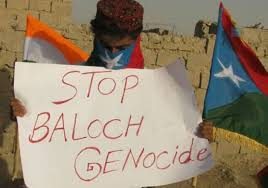


Karachi [Sindh], September 12 (ANI): Baloch women who were demanding the release of missing persons were dragged on the streets of Karachi by police.
“This is so-called Islamic Republic of Pakistan. Baloch women being dragged on the streets of Karachi for demanding release of Baloch missing persons. Unfortunately, Pakistan is member of UN,” tweeted Ashraf Baloch, a human rights activist.
Despite efforts by civil society, there is no end to the issue of enforced disappearances in Pakistan, as the State continues to use it with impunity.
The irony is that successive Pakistan governments have pledged to end the practice of enforced disappearances, however, there is no end to it, reported Canada-based think tank, International Forum for Rights and Security (IFFRAS).
The reality is that the Pakistani state is comfortable with using it as a tool to throttle dissent and to terrorize people who question the all-powerful Army or seek individual or social rights.
Former lawmakers and human rights activists on the International Day of the Enforced Disappearances (August 30) demanded legislation to ensure that limits were imposed on state institutions and laws were introduced in Pakistan that laid down boundaries for intelligence agencies over enforced disappearances.
The armed forces of Pakistan are widely accused of being responsible for the ‘disappearance’ of an estimated 5,000 to 8,000 persons. As per local media reports, activists from Balochistan are high on the list of the ‘missing’, reported IFFRAS.
Baloch ‘nationalists’, forming many groups, have been fighting the state to oppose curbs on civil rights and the CPEC projects that they claim deprive Balochs of natural resources while giving few jobs.
Cases of enforced disappearances have been majorly recorded in the Balochistan and the Khyber-Pakhtunkhwa provinces which host active separatist movements.
https://twitter.com/tbpenglish/status/1536393037445742592
Families and activists have described being harassed, arbitrarily arrested and detained, and subject to violence for simply exercising their right to peaceful protest – a right protected by international human rights law and domestic law, reported IFFRAS.
Enforced disappearance violates international human rights law and is a crime under international law. It also violates the fundamental rights enshrined in the Constitution of Pakistan.
Amnesty International South Asia has noted, “Victim families who have exhausted all legal avenues are forced to publicly campaign in search of the fate and whereabouts of their loved ones.” (ANI)